Figma - UX/UI Designs
Overview
As part of my academic curriculum in college, I was required to design a range of UX/UI design projects that not only focus on real-world applications but also on product design. Two of my flagship projects include redesigning an existing mobile app (Uber) and developing an entirely new web product, KidCoin. Both projects show my ability to approach design as a creative and analytical practice.
The projects were developed using Figma as my primary design tool alongside other aspects like user research, structured ideation processes, and front-end development. Each project was undertaken using an extensive design process that included aspects like user need identification, user journey mapping, wireframing, prototyping, and finally developing these designs into usable interfaces.
Role: Graphic Designer | Timespan: College Years | Platforms Used: Figma
THE Problem
In today’s digital age, digital platforms face many problems in terms of balancing functionality, usability, and user engagement. Similarly, ride-sharing platforms like Uber face problems in terms of navigation and service fragmentation. Another issue is that financial literacy platforms aimed at kids tend to be too simple or fail to engage kids and parents alike.
This shows that digital platforms are often designed around systems rather than people.
Problem Statement
What design opportunities exist in developing digital platforms that not only make complex tasks easier but also simple, intuitive, and engaging while ensuring usability, accessibility, and aesthetics for diverse users?
THE CHALLENGE
The design challenge was two-fold:
1. Uber Redesign – Make it easier to use and more streamlined in terms of its multiple service options like ride-sharing, food delivery, and other features, without overwhelming users in the process.
2. KidCoin Website – An entirely new product aimed at teaching kids about financial responsibility while also engaging parents and educators in an effective manner.
However, both designs had to strike the right balance between beauty and functionality, with every design element serving an important purpose.
THE PROCESS
USER RESEARCH
User research was integral to the process. For both designs, user research helped me understand user pain points. For instance, user research helped me understand that:
* For the Uber redesign, speed and clarity are more important than the number of features included
* For the Uber redesign poor user interface can cause user navigation issues due to poor hierarchy and labeling
* For the KidCoin app, parents want their children to have an engaging experience, not feel restricted or forced to learn
* For the Uber redesign, younger users need visual stimulation
This information helped me make both structural and visual design decisions, where both designs would meet user expectations.
Competitive Analysis & Inspiration
Competitive analysis is an integral part of the entire process. For instance, I had to analyze other applications within both domains, including:
* Ride-sharing apps, delivery apps, and other multi-service apps to understand how to integrate multiple services within an application
* Educational apps, financial apps, and other applications designed for children to understand how to keep them engaged
This information helped me understand user behavior, which inspired me to create designs that included:
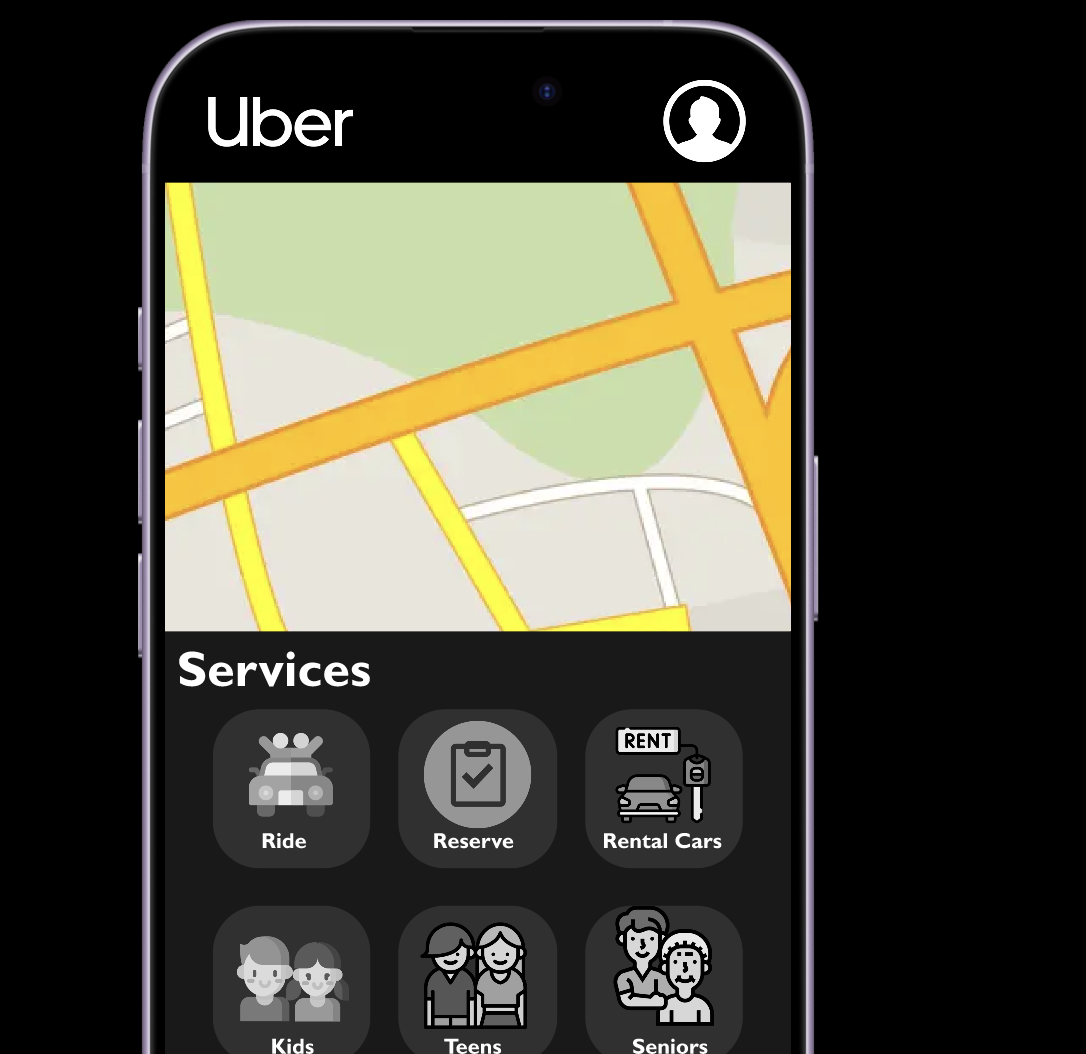
* A clean, map-centered interface for the Uber redesign
* A module-based navigation system for the Uber redesign
* A gamified learning system for the KidCoin app
However, I did not overcomplicate the designs, choosing clarity over overcomplication.

VISUAL DESIGN STRATEGY
My Strategy across the two projects relied on these core concepts:
* Consistency across all screen interactions
* Clear hierarchy through typography and spacing
* Color systems to support usability
* Iconography to support usability
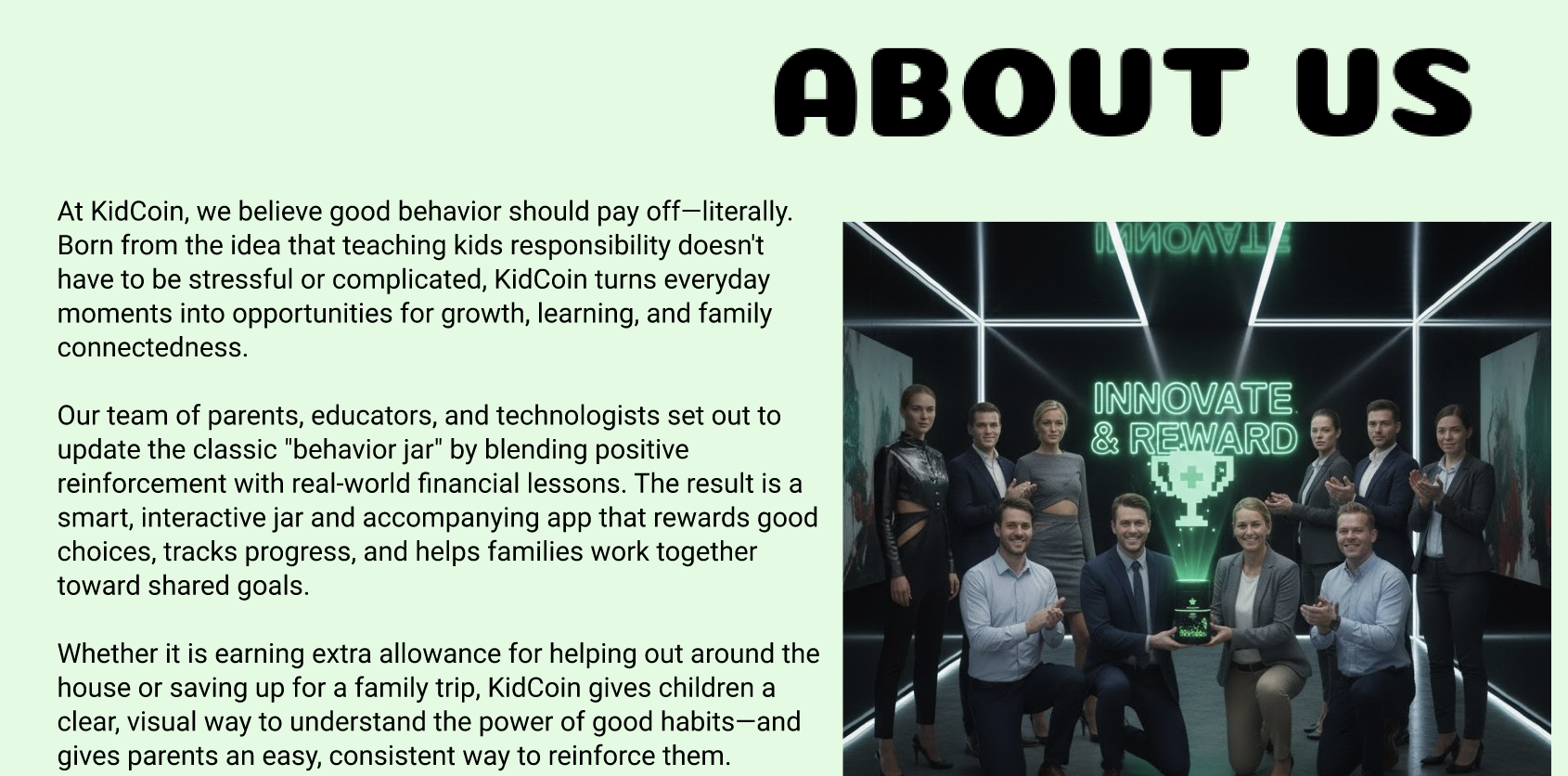
For KidCoin, a more playful yet organized visual aesthetic was implemented to cater to the children, while still being professional and appealing to parents.
For Uber, the existing minimalistic and map-centric visual language was adapted for the redesign.
Prototyping & Iteration
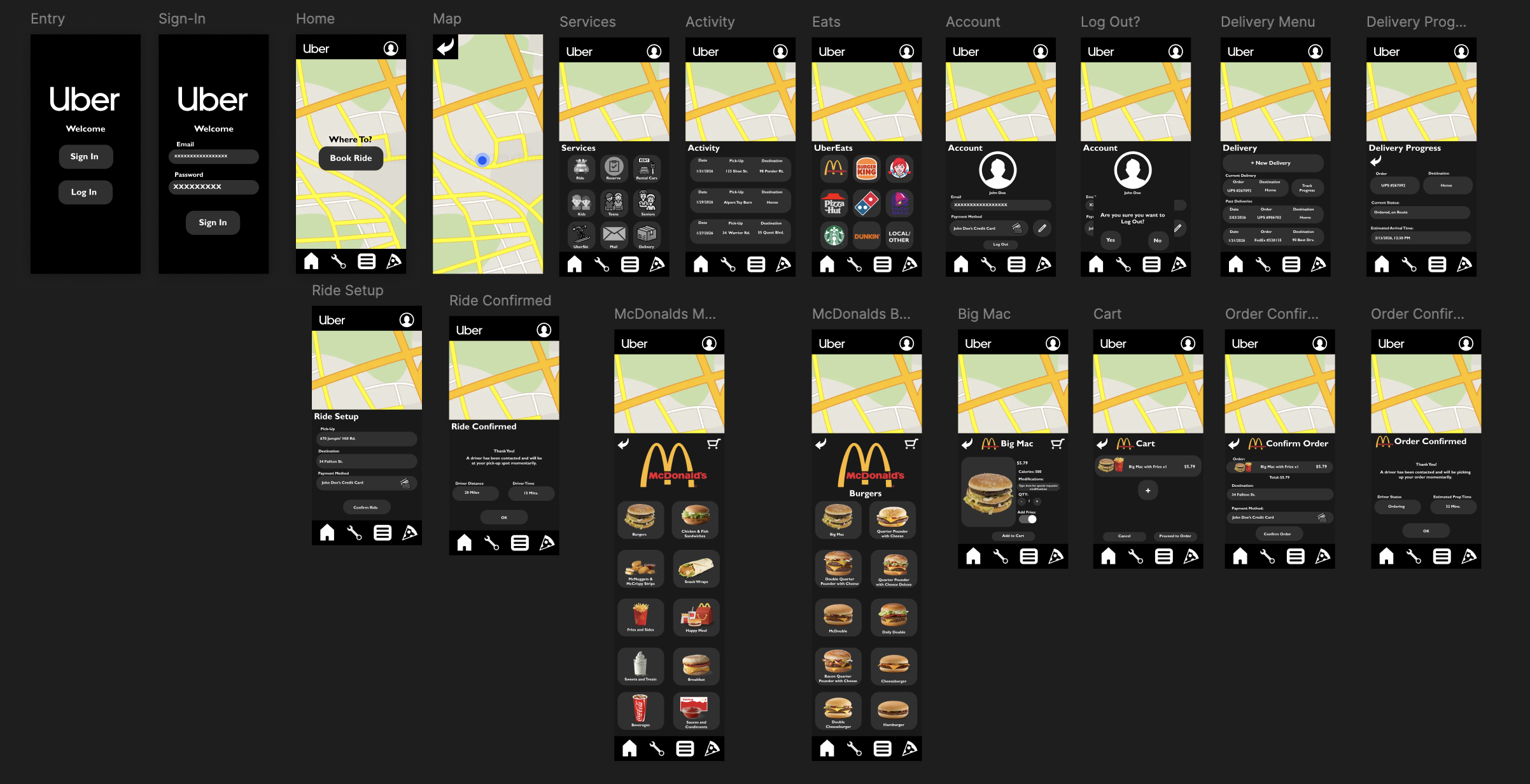
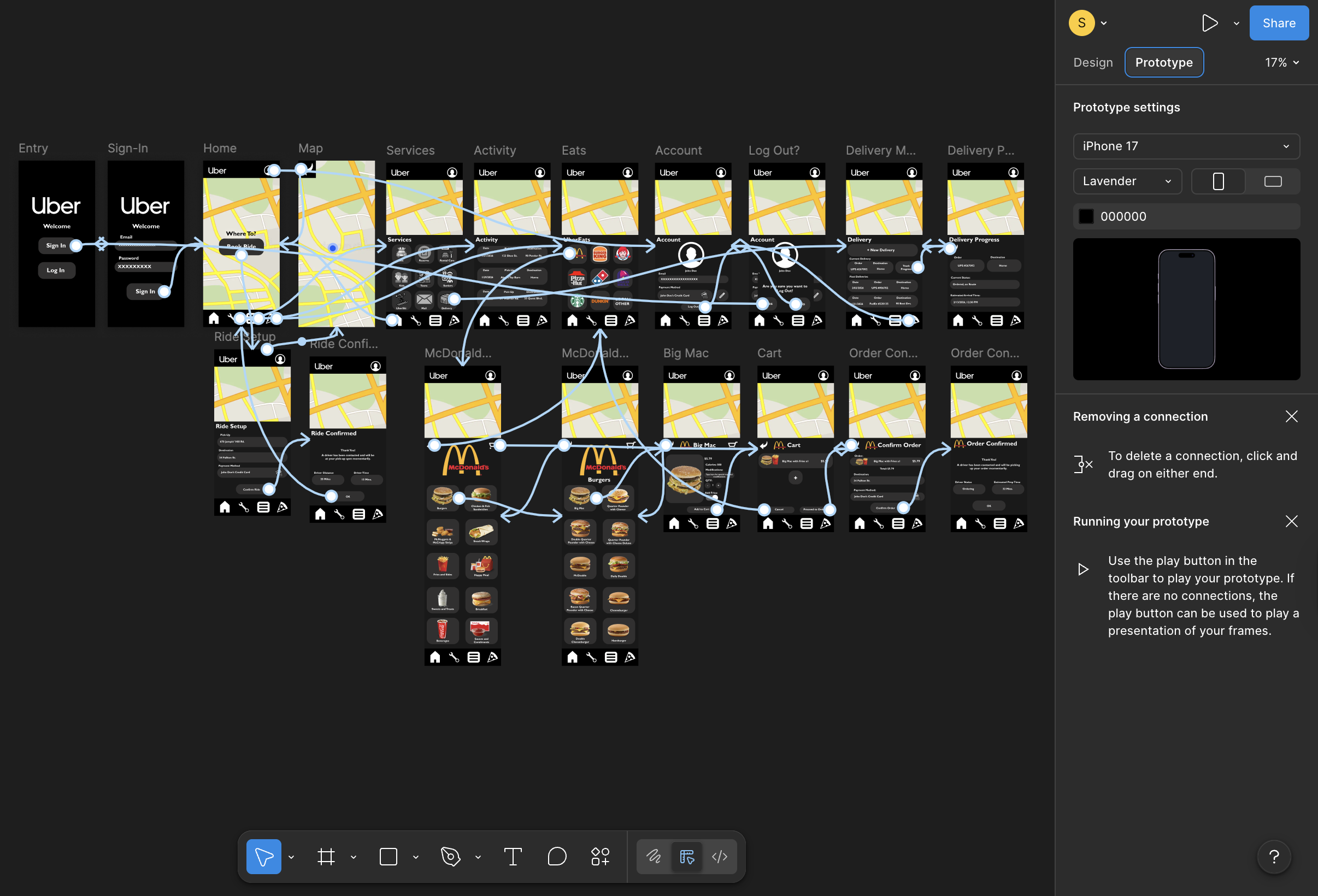
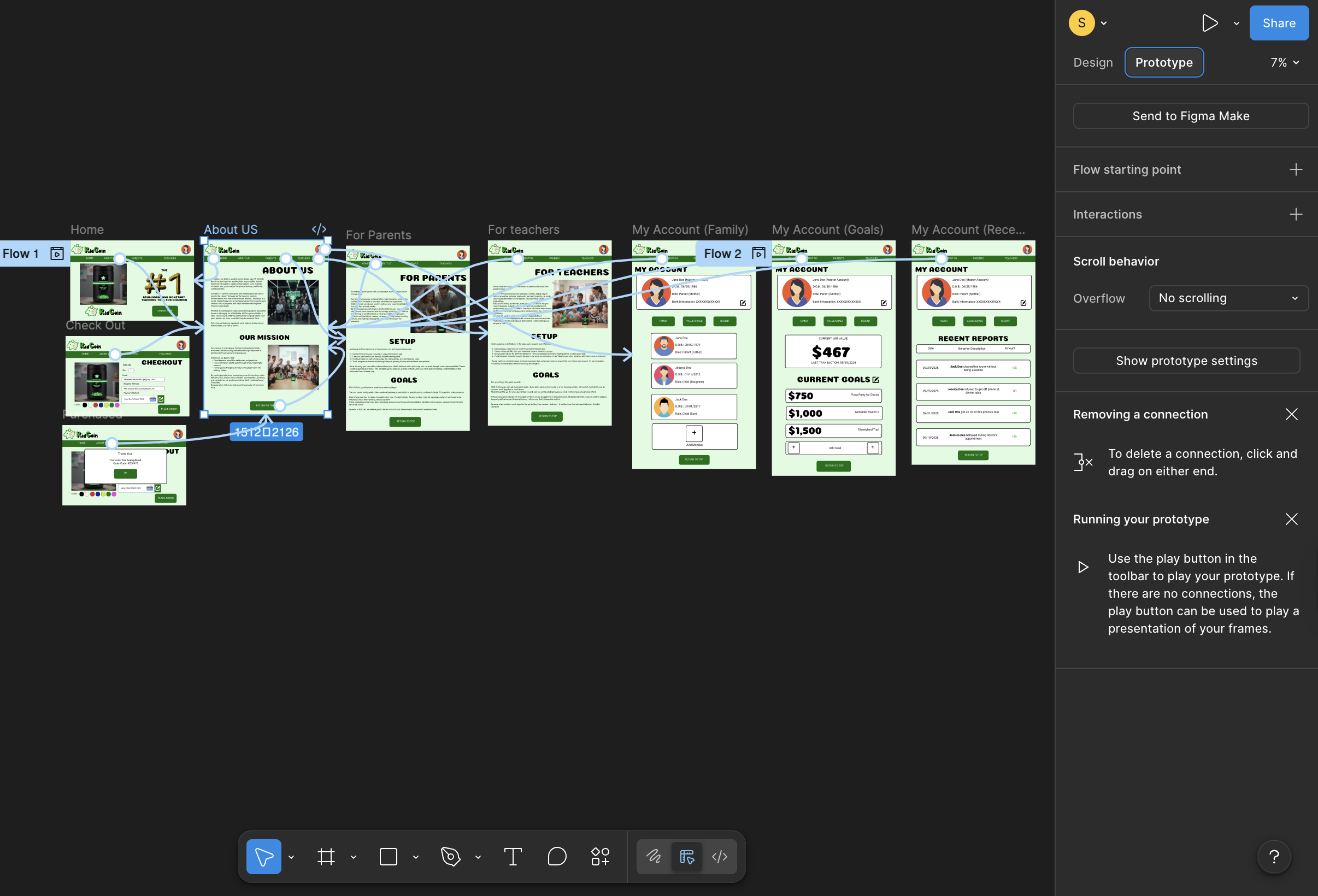
After implementing the visual design systems, I moved on to interactive prototyping in Figma to simulate real user experiences. Prototypes were created for both designs, enabling end-to-end simulation of critical functionalities, including booking a ride, ordering food, managing account settings, and using KidCoin’s dashboard and goal-tracking features.
Iteration was conducted through self-assessment and peer review. As a result of the simulation, various challenges were identified, including unclear navigation cues, unnecessary steps in the user experience, and inconsistent component behavior. All these challenges were resolved through multiple design iterations. The iterations involved several changes to the designs, including the navigation structure, button placement, and overall visual hierarchy.
For the Uber redesign, the iterations focused on minimizing cognitive load for users and ensuring they could access core functionalities quickly. In the KidCoin redesign, iterations involved enhancing the clarity and engagement of the designs, especially for younger users. This was achieved through various iterations, including enhancing the visual cues, readability, and overall intuitiveness of the designs.
The overall process ensured that the final designs were not only aesthetically pleasing but also efficient, accessible, and user-centric.
FINAL DESIGNS
For the final submission, the following deliverables were completed:
UBer Redesign
A completely new interface for the Uber redesign, including all aspects of navigation, services, and user interactions.
Key Design Features:
* Unified navigation bar for all services
* Simplified and intuitive ride-booking experience
* Integrated food delivery experience
* Clear and detailed account and activity tracking
KidCoin App
A completely new website for KidCoin, including multiple pages for the website, such as the Home page, About page, Parent/Teacher sections, and account sections, along with financial goal tracking
Key Design Features:
* Interactive dashboards for families
* Goal tracking and setting
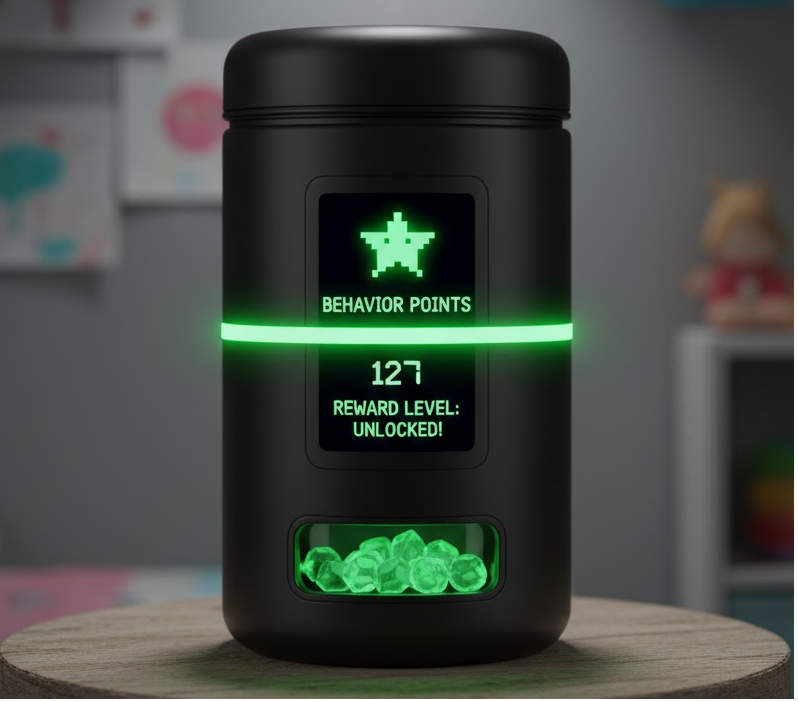
* Behavior-based reward system
* Dedicated sections for parents and teachers
Impact & Reflection
Project Outcomes
Both projects have resulted in a fully designed and developed end-to-end solution that strikes a good balance among user experience, visual design, and technology.
With the redesign of the Uber platform, it has been successfully streamlined into a better and more intuitive experience. The user experience for various functionalities, such as booking a ride or ordering food, has been simplified and streamlined into fewer steps. The final design prototype shows a more user-friendly, better-structured platform.
The KidCoin platform started as a design concept and has been successfully developed into a fully functional end-to-end solution that meets the multiple roles and functionalities of a web platform. The final design shows a platform that meets the needs of parents, teachers, and kids separately, with various functionalities and features successfully developed and integrated into the design. The design and development process has been formally presented in critiques, and process books have been included to show the final design solutions. The process books have also been included to show the design thinking and process that went into creating the final design solutions.
Learning & Growth
From this experience, I learned to:
* Excel in Figma and Prototyping
* Apply a deeper understanding of User-Centered Design
* Apply research to design decisions
* Apply design and development
I also learned to appreciate the importance of iteration, as my initial designs may not always be perfect but can always improve.
Future Development
If I had more time to work on this project, I would:
* Perform usability testing on a wider scale
* Incorporate accessibility features
* Incorporate more interactivity through micro animations and transitions
* Develop KidCoin into a deployable application
Retrospective
Looking back, I can say that this project has been a milestone in my growth as a designer. This project has shown my capabilities as a designer, not just in my knowledge but also in my critical thinking and design skills.
From concept to prototype to coding, this project has been a culmination of my knowledge of the entire UX/UI Design Process, a knowledge that I continue to improve on in future projects.