Motion Graphics/Animations
Overview
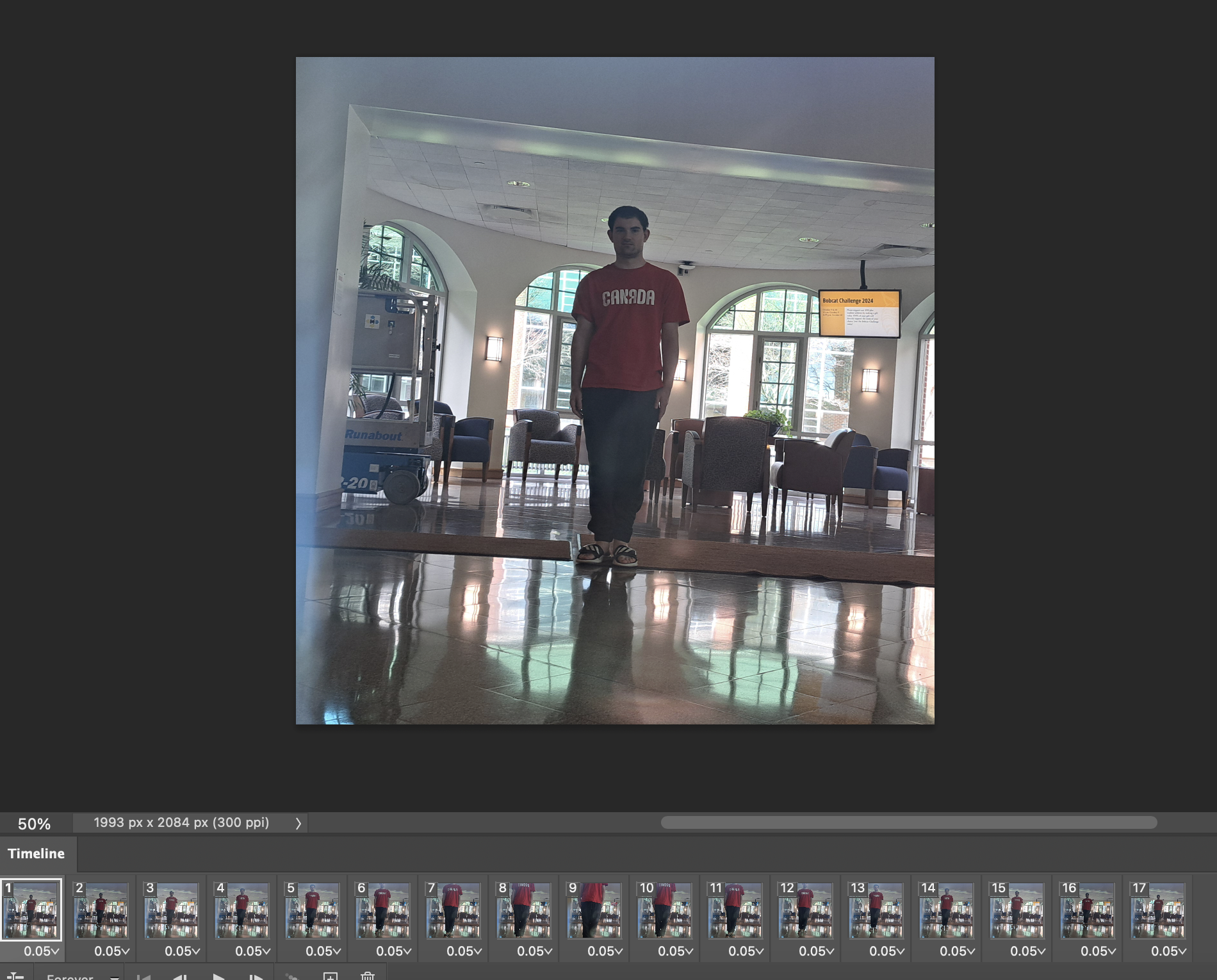
These motion graphics and animations have all been created during my time studying graphic design at university, as part of an intensive period of creative exploration. This collection of works includes a range of four different types of motion media, including a beach animation, a repeating illustrated UFO animation, an outdoor stop-motion animation, and a study of cinemagraphs. These projects have allowed me to explore motion design as a separate artistic practice, beyond just visual communication.
Each project provided a unique set of constraints and challenges for me, with each one having its own specific content and form of execution. Collectively, these projects tell the story of a progression of learning and discovery – from understanding how to create frame-by-frame animations to understanding how the process of creating cinemagraphs differs. These works are united by their visual simplicity but vary greatly in execution, style, and purpose.
Role: Graphic Designer | Timespan: College Years/Free Time | Platforms Used: Adobe Illustrator, Photoshop(Timeline Feature), After Effects
THE Problem
It is an art that requires competency and comfort in many artistic spheres at once – graphic design, timing, narrative flow, and technical execution. It is in the shift from the graphic designs students know to motion-based work where the disconnect between their skills and what they have been taught occurs. This is not about the inability to create or to learn new technologies – this is about shifting the way they see time as opposed to space.
There was much more to motion graphics than understanding how the tools worked. It was about learning to read motion – why a looped animation could communicate an eternal state, why motion within a static image created eerie tension, and why the pace and timing could change emotion. If not learned through practice and iteration, these concepts would only remain theoretical. Furthermore, it is not only about creating something – it is about what that thing could communicate. The subjects that most motion-based projects use are usually packaged and synthesized. Here I challenged myself to try something else – finding, capturing, and amplifying motion from the natural world, my home, and my illustration.
Problem Statement
What does it take to acquire an active vocabulary in motion, encompassing illustration, photography, and mixed media, through engaging directly with the environment as studio and subject?
Such an approach provided the context within which the project series was not just a collection of individual technical experiments, but rather a study of the connection between the designer, their environment, and the phenomenon of motion itself. The issue of how motion expresses meaning became intertwined with the issue of where motion can be found or created.

THE CHALLENGE
Each project within the series presented its own unique design challenges which needed individual solutions:
· Seamless looping
For the beach and UFO GIFs, there was a requirement for frame looping that would not have any detectable gaps – this technical limitation dictates compositional and timing choices.
· Found objects
In the stop-motion assignment, meaning had to be derived from a randomly collected pinecone – this project involved paying attention and working creatively from a graphic point of view.
· Motion masking
The cinemagraph form required careful attention to the determination of which component was moving and which staying static – this is an important skill for decisive visual editing.
· Canvas-as-subject
Employing the Nintendo Switch as a cinemagraph frame presented the problem of creating art based around an everyday consumer object, without making it look like product advertising.
THE PROCESS
USER RESEARCH
While the two projects were more studio-based than product design-oriented (in terms of research), research was conducted in two ways: observing the environment and audience responses.
In the case of the beach animation, the research consisted of observing wave rhythms and coastal movements; specifically, the observation was that waves do not repeat but change as a result of ebb and flow within cycles.
The stop-motion project relied on a form of self-observation, as walking served as the research method. Details like how the pinecone interacted with the ground, the time of day at which the filming took place, and the shallow depth of field were all part of the visual language of the stop-motion.
For both pieces, informal audience response to their motions and emotions was gathered from peers and instructors. In particular, the cinemagraph elicited audience responses that commented on the idea of stasis versus movement and on how that created an atmosphere that could be either meditative or disturbing, depending on one's sensibilities.
Competitive Analysis & Inspiration
Explorations of existing motion graphic pieces influenced the concepts behind each piece in this thesis. References include the following:
· Pioneers of Cinemagraphs
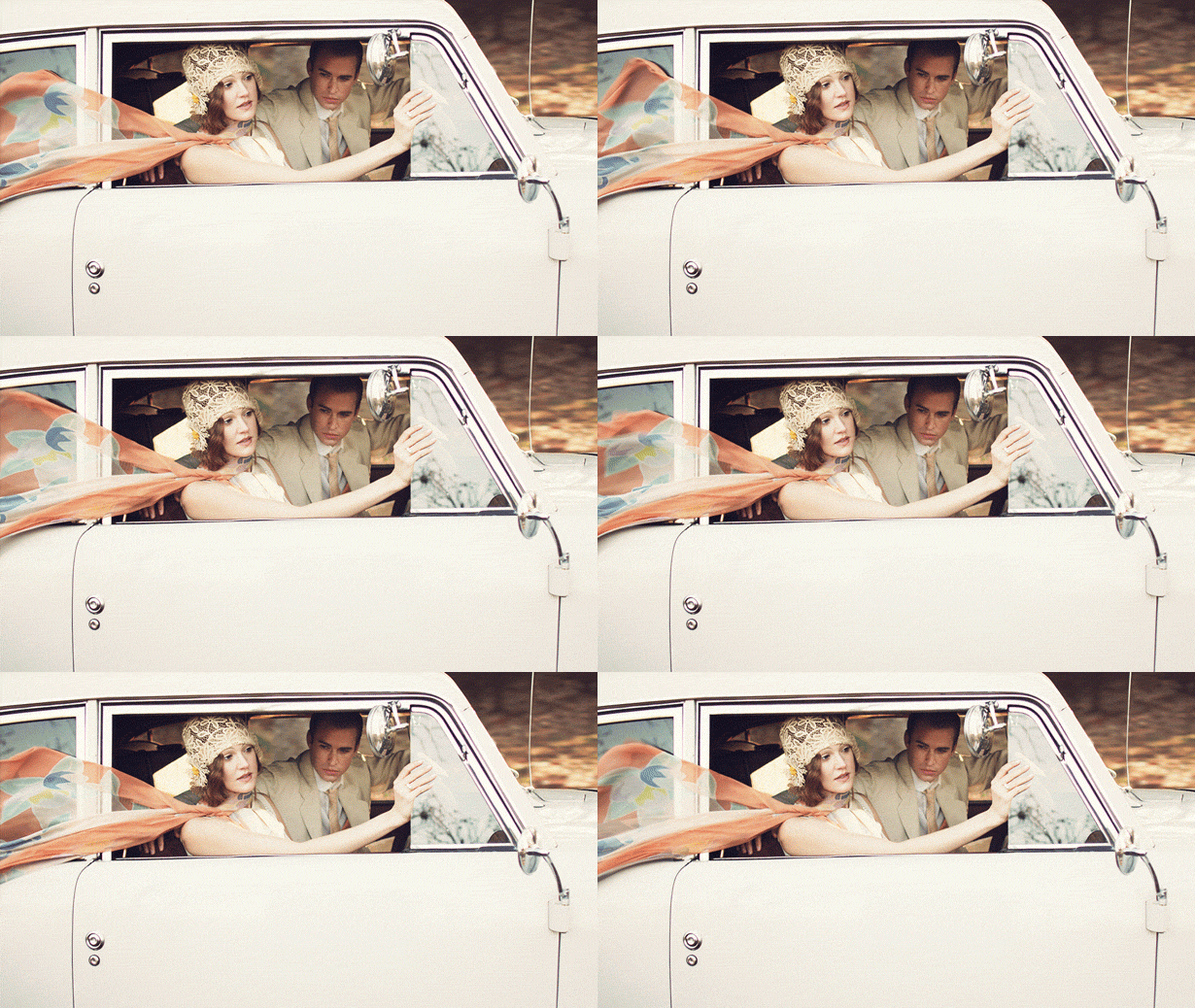
Jamie Beck and Kevin Burg have been recognized as pioneering cinemagraph artists, particularly in fashion photography. Their use of isolating motion in stills to create otherworldly and quietly energetic images has been used as a fundamental reference point.
· Indie GIF Animation
The animated gifs produced by independent artists during the GIF renaissance of the mid-2010s proved that looping animations can maintain their aesthetic integrity beyond simple novelties. This was especially true in pixel-art loops and frame-by-frame hand-drawn art.
· Stop-Motion Film Tradition
The legacy of stop-motion filmmaking has helped shape this thesis' concept of using ordinary, found objects to tell stories and build narratives as characters in the pieces.
· Game UI Motion Language
The choice to depict the Nintendo Switch in a cinemagraph came from the device's inherent motion UI language.
VISUAL DESIGN STRATEGY
The visual strategy across all four projects was governed by a principle of economy: motion should do exactly as much work as necessary, and no more. This meant resisting the temptation to animate every element, and instead identifying the single axis of movement that would carry the most expressive weight.
The most powerful motion is often the most restrained — a single wave, a rotating object, a breath of texture across a screen.
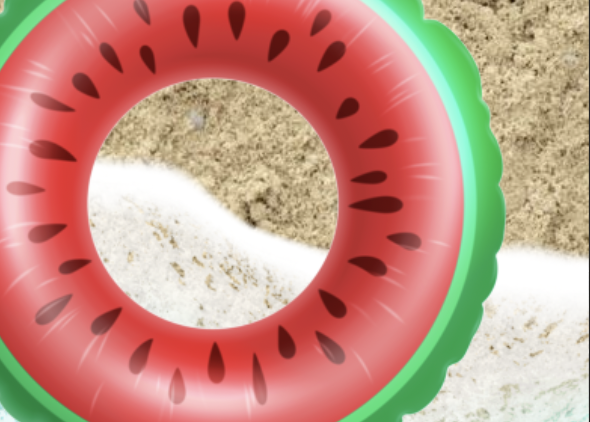
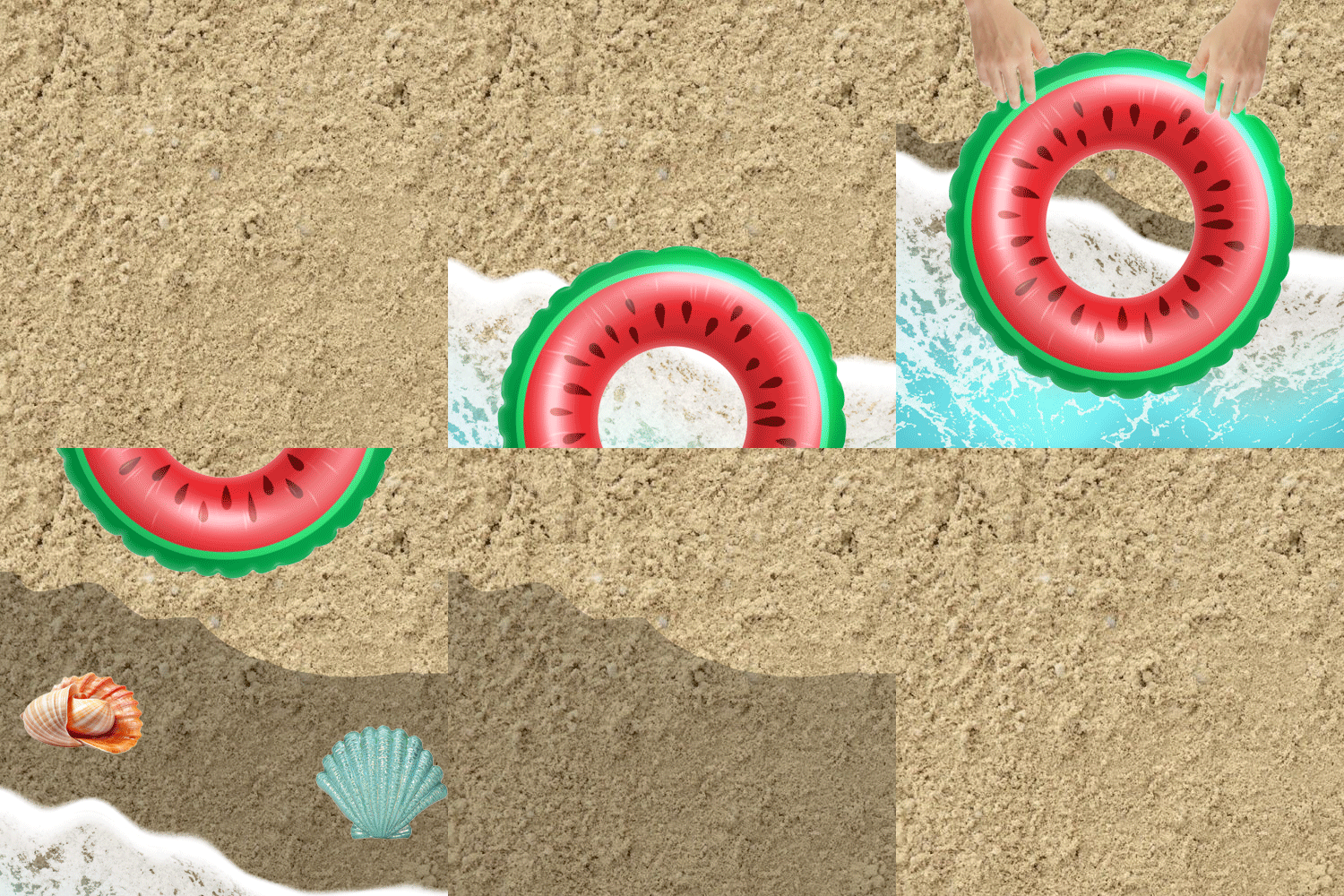
For the beach animation, the visual strategy centered on atmospheric suggestion rather than literal representation. Sandy tones and simplified water elements conveyed a seaside environment through graphic shorthand, with the motion itself providing the sense of place.
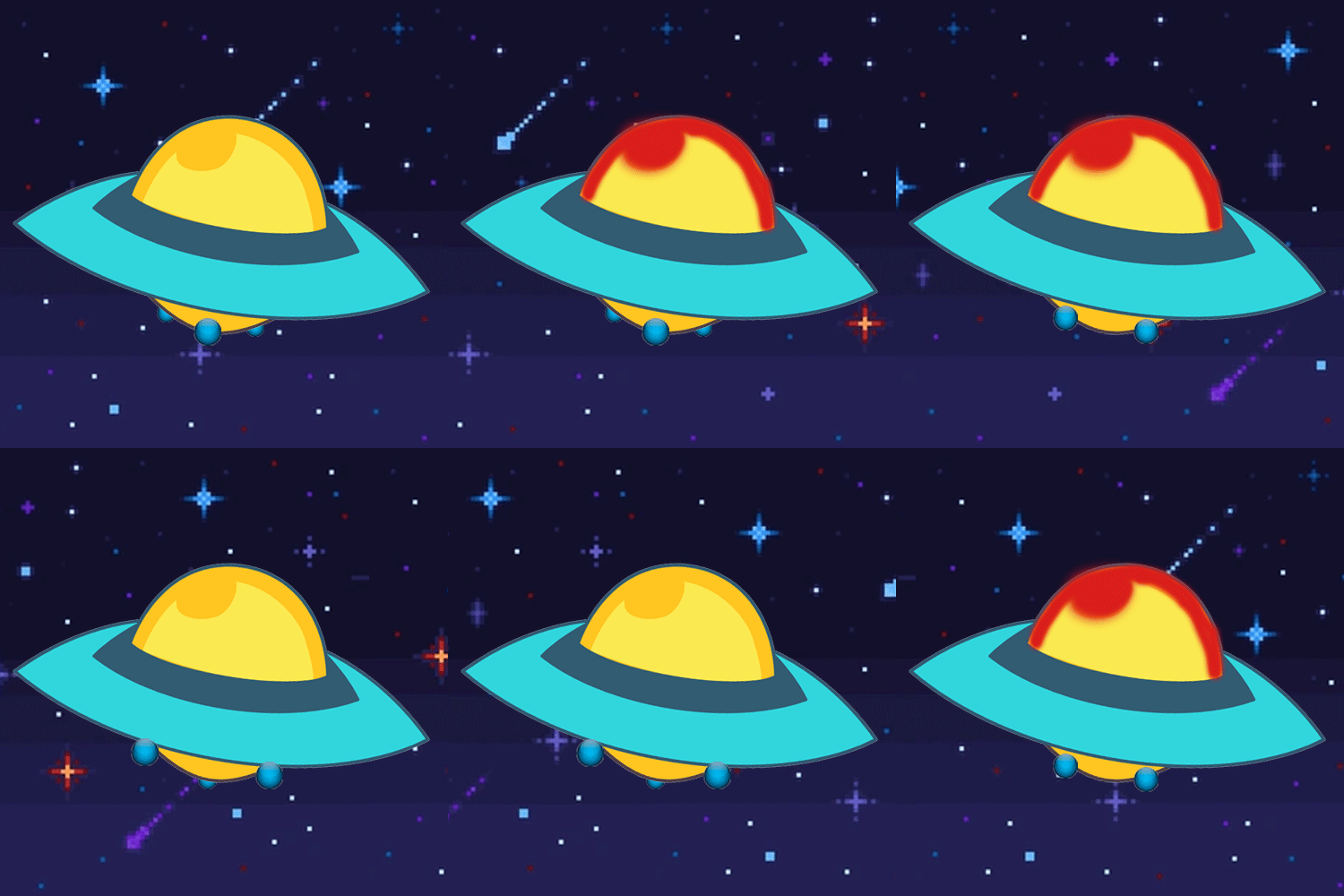
The UFO illustration employed a bold, cartoon-adjacent palette — deep space navy contrasted with warm yellows and vibrant teal — drawing on the visual language of mid-century science fiction illustration. The looping flight path was designed to feel both playful and mechanically plausible, suggesting a vessel that operates according to its own internal logic.
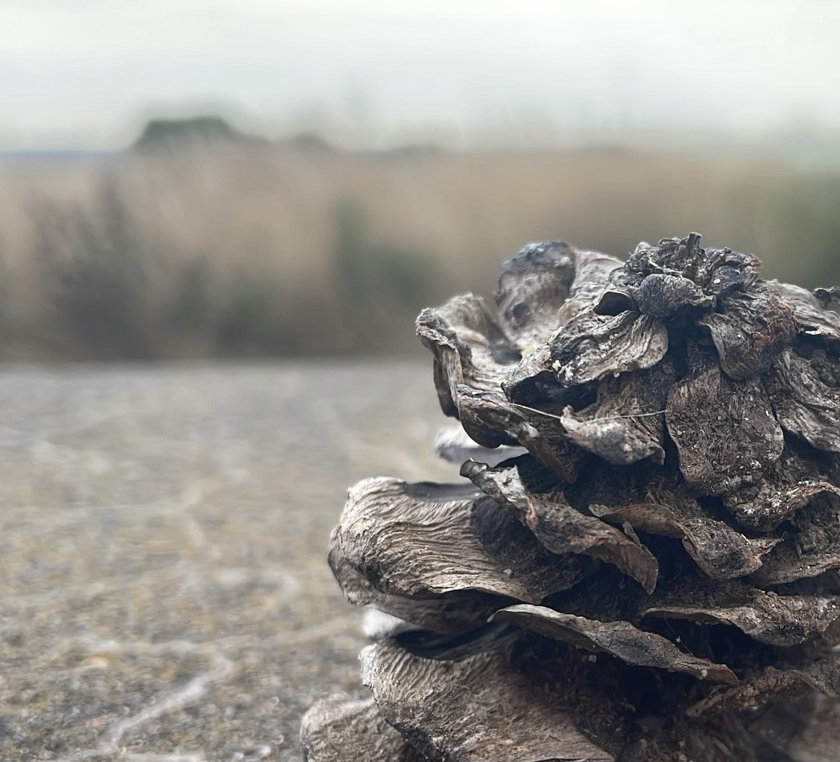
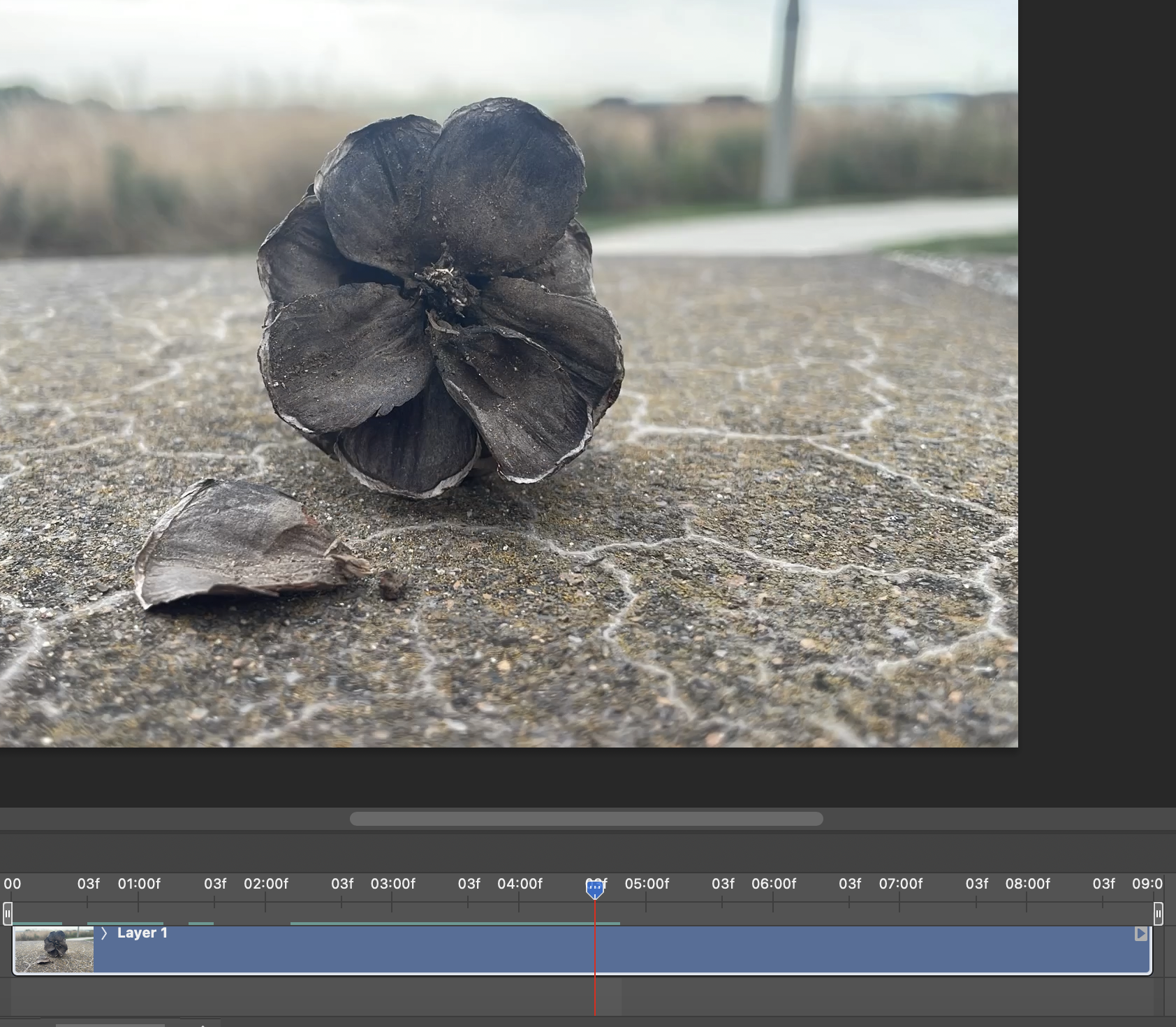
The stop-motion pinecone was treated with a deliberately cinematic visual register: a shallow depth of field isolating the subject against a soft, overcast sky, on a weathered stone surface crosshatched with natural lichen patterns. The desaturated color grade lent the piece a contemplative quality that elevated the subject beyond the literal.
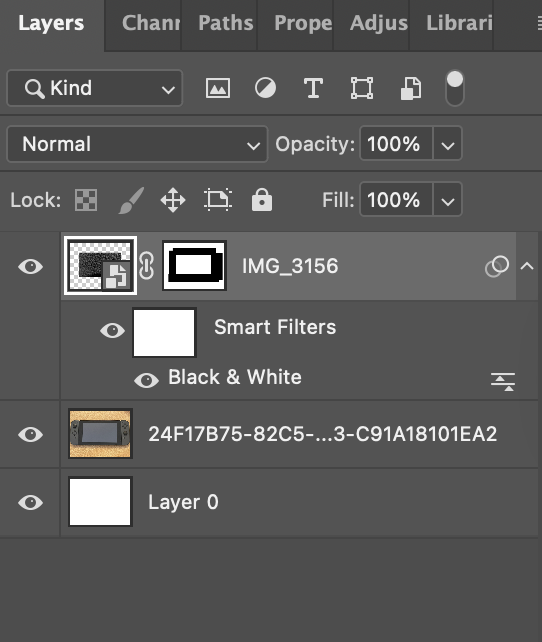
The cinemagraph's visual strategy hinged entirely on contrast: the absolute stillness of the Nintendo Switch's physical body against the subtle, looping texture visible on its screen. The warm wood grain of the surface beneath the console provided a grounding element, anchoring the technological object within a domestic warmth.
Prototyping & Iteration
Each animation went through changes and edits before it was finished. The process was different for each format:
* Beach GIF
The early versions of the beach animation had a problem. It looked like the animation stopped for a second. This made it feel like it wasn't moving smoothly. I changed the timing of the frames. I added some extra frames to make it feel smoother. I also made sure the colors were the same in each frame.
* UFO Loop
The UFO animation had a few versions too. At first it looked like it was moving in a line, which didn't look very natural. I added some easing to make it feel more natural. This means it slows down a bit at the top of its movement. I also changed the background to make it feel 3D.
* Pinecone Stop-Motion
The stop-motion animation was the one that needed the most changes. The early frames didn't have lighting, which made it look like it was flickering. I took pictures in better light and that fixed the problem. I also changed the frame rate to make it feel more expressive.
* Console Cinemagraph
The cinemagraph needed a lot of work with masks, in Photoshop. At first it was hard to make the moving screen and the still console body look like they were separate. I kept refining the mask until it looked perfect. I also changed the loop point in the moving texture so it didn't look like it was repeating.
FINAL DESIGNS
Each of the final four animations addressed the core design problem in a way that was both deliberate and cohesive visually:
Seaside Beach GIf
A warm-toned and seamless loop depicting the rhythmic motion of waves and beach sand, as if hypnotizing the viewer into the experience. The point where the loop occurs is not noticeable, and the animation flows as if it were an ongoing natural motion.
Key Design Features:
· Personality Through Simplicity
This beach aimation acquired its personality through simplicity rather than complexity – limited colors, clear forms, and a minimal number of moving parts contributing to this effect.
Design UFO Animation Loop
A detailed illustration of outer space in which the cartoon UFO travels smoothly through the stars within its orbit. This animation combines elements of illustration and character design with precise animation looping.
Key Design Features:
· Invisible Looping
Each animated element had to be designed to loop seamlessly without a perceptible gap.
Pinecone Stop-Motion
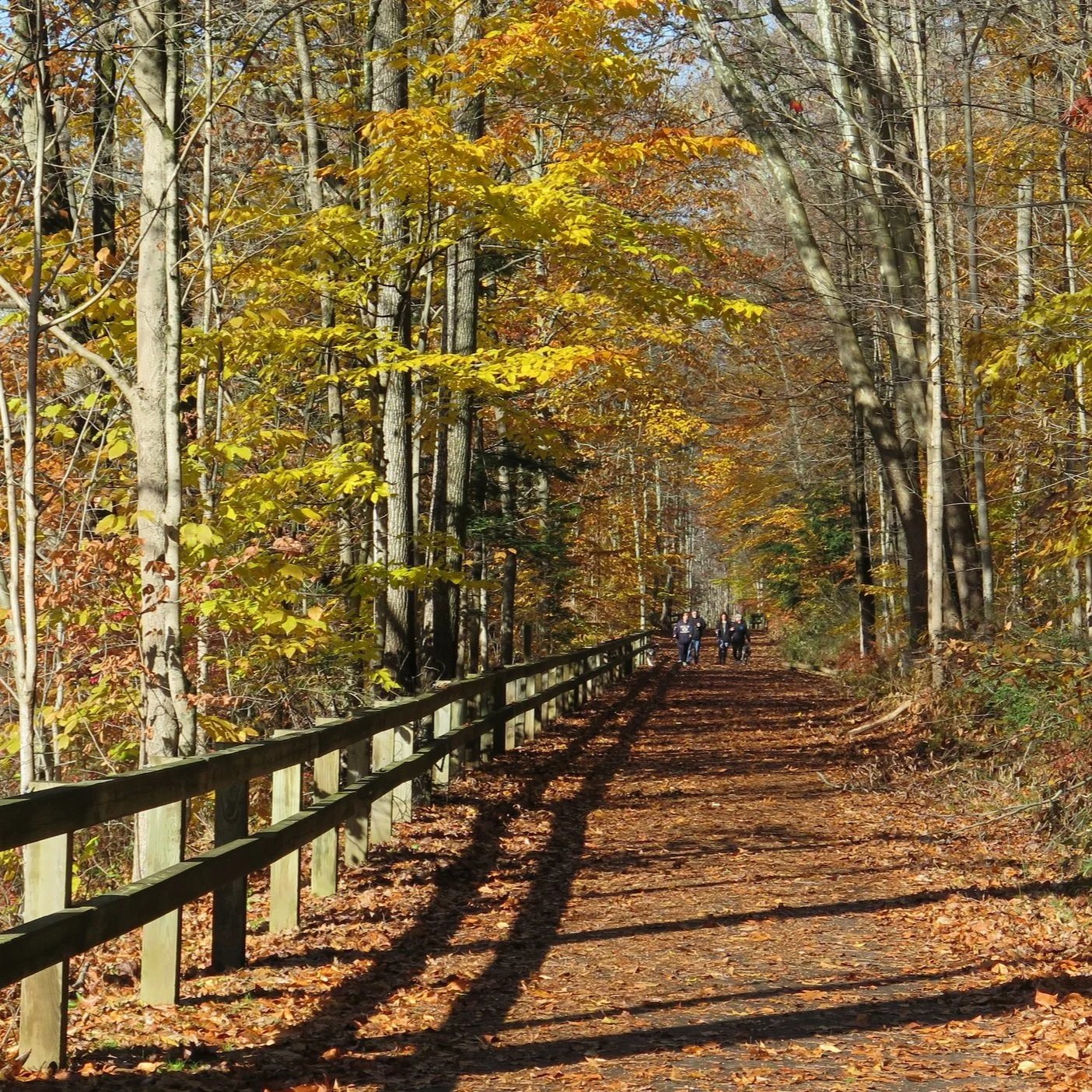
A stop-motion clip showing a found object, namely a pinecone, resting upon a pathway made from stones, then losing its leaves, then falling over. Shot using a cool color palette and natural light, the animation captures the essence of walking in the forest by combining photography and stop-motion animation techniques.
Key Design Features:
· Intention in Photography
Stop-motion animation and the cinemagraph were designed with intention, utilizing elements of depth of field, surface choice, and lighting characteristics found in photographic art.
Console Cinemagraph
A cinemagraph in which the hardware remains static, but its screen moves continuously. In this case, the Nintendo Switch is completely motionless on a wooden desk, but the content displayed on the screen animates.
Key Design Features:
· Motion as Concept
In particular, the cinemagraph relied on the decision about what part of the image moved, and which stayed still as its concept.
Impact & Reflection
Project Outcomes
These projects have been fundamental in shaping my understanding of movement as a design medium. In previous design experiences, I tended to view animation as an enhancement that gives a design energy and dynamism. Through these projects, my perspective was changed. Movement can be a design choice on par with any other, whether color, font, or composition. If it is applied arbitrarily, it will distract from what the designer is trying to communicate. On the other hand, if done carefully, it will convey meaning beyond what static form can express.
In particular, the cinemagraph project taught me the importance of thinking about motion in relation to visual hierarchy. Deciding what not to move within the cinemagraph, and being able to justify this decision, was like an editorial lesson that helped me see how visual hierarchy can work in all kinds of media.
On the other hand, the stop-motion video project made me realize how important it is for designers to look carefully at the objects around us and think creatively about them. The pinecone I observed in my neighborhood became a subject for artistic exploration.

Learning & Growth
While the specific technical abilities gained throughout the series – such as Photoshop animation techniques, framing, GIF optimization, mask layering, and compositing, among others – will become fundamental parts of my motion graphics design process, the far greater learning lies in the realm of concept.
I was taught how to conceive of time as an element in design. Just as a typographer must consider the thickness and arrangement of lettering, the motion graphic designer must understand the weight and placement of moments. If one second too many, it is pensive; if it is one second too few, it is hectic. These differences are known intuitively rather than intellectually and must be honed through experience working with animation.
Another important lesson learned during this process was that limitations do not stifle creativity but stimulate it. While the restrictions of the GIF format, the natural inconsistencies of stop-motion, and the necessity of having a single-looping element within a cinemagraph were inconvenient at times, they were also necessary for making creative choices that ultimately improved the final project.
Future Development
The four projects presented here are only stepping stones and not finished products. All the formats discussed here have a lot of room left to explore:
· The beach animation can be expanded into a full illustrated film, with several environmental factors, such as clouds, birds, and tidal changes, complementing the existing looped background.
· The UFO illustration could form the basis of an animated sequence featuring other extraterrestrial characters that would communicate through movement and environmental reactions.
· A longer stop-motion project can be created using a variety of found objects to establish a language through organic shapes in architecture.
· Finally, the most exciting format for me is the cinemagraph. It still seems under-researched within the graphic design field, and it should be explored as an effective compositional format and not just a novelty effect. Possible directions for investigation could include working with various types of loops, multiple motion areas, or even cinemagraph sequences.
The next logical step for all projects would be incorporating motion into a web context.
Retrospective
Looking back at this project series, I can see how far I've come in design. What stands out to me is not any one project. How they all fit together. Each project, no matter what it was about or how it was made, was trying to answer the question: where is the movement in this moment and how can I show it?
* The beach had its movement in the way the waves and sand worked together.
* The UFO had it in the path it took through a made-up sky.
* The pinecone had it in the changes it made frame by frame.
* The gaming console had it in the repeating life of a screen that keeps moving even when no one is using it.
In each case, the movement was already there. My job was to find it show it and share it with others. That's what motion graphics is about: not making something flashy but showing the movement that’s always there in the world. When I do that, I can change how people see the world.
These projects are still important to me. Not because they're the most complicated or fancy, but because I made them with curiosity. That's what makes design matter: paying attention in a way.